Aquaculture Technology
FISHFARMING & EQUIPMENT
| Chemicals & Agents |
 |
| Chemicals & Agents |
|
|
SPAWNING AGENTS for finfish
|
|
TRANQUILIZERS for aquatic animals Eugénol-Methoxyphenol (Clove-oil) is obtained from the buds, leaves and stems of clove trees (Eugenia sp.). It is a very useful, natural and environmental friendly tranquilizer, which can be used for various fish species. A higher tolerance against longer exposure times gives a greater security and makes the application under practice condition much more easier. Because of the low dosage (30-90 ppm) there occurs also no alteration on taste of the meat of the fishes. Clove oil is more effective at reducing the short-term stress response induced by handling or manipulation, and is a recommended and widely used fish anesthetic. Available as pure oil in vials of 5-50 Milliliter. |
DESINFECTANTS for aquaculture
|
STARTERBACTERIA for recirculation systems
|
Feeds & Diets - Eggs & Frys - Consulting & Planning - Books & Posters
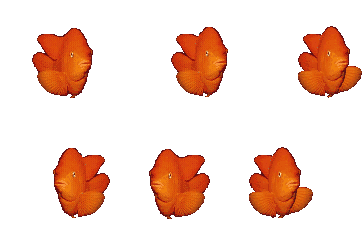

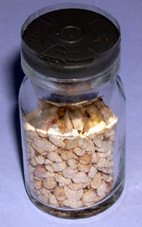 In nature, reproductive development and spawning in finfish is
controlled by environmental factors such as temperature, photoperiod,
nutrition, water quality, and presence of spawning substrate. In
aquaculture, it is not always possible or economically feasible to replicate
natural conditions especially as many species are now grown some distance
from their original geographic location. Thus, endocrine or a combination of
endocrine and environmental manipulations are utilized to facilitate
reproduction. In the last decade significant research has been conducted
worldwide on ripening fish sexuality using various preparations.
In nature, reproductive development and spawning in finfish is
controlled by environmental factors such as temperature, photoperiod,
nutrition, water quality, and presence of spawning substrate. In
aquaculture, it is not always possible or economically feasible to replicate
natural conditions especially as many species are now grown some distance
from their original geographic location. Thus, endocrine or a combination of
endocrine and environmental manipulations are utilized to facilitate
reproduction. In the last decade significant research has been conducted
worldwide on ripening fish sexuality using various preparations.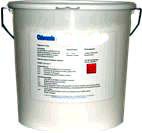 We
supply various chemicals for disinfection in aquaculture and aquaria. Some
chemicals are in some countries only allowed for fish which are not used for
human consumption, like eggs, spawners or ornamental fish.
We
supply various chemicals for disinfection in aquaculture and aquaria. Some
chemicals are in some countries only allowed for fish which are not used for
human consumption, like eggs, spawners or ornamental fish.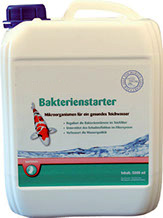 For the startup
and stabilization of biological filters in recirculation systems, but also
for biological cleaning of water in culture or garden ponds, special
bacteria sets have been developed. The highly active bacteria also help to
stabilize existing or old filter systems. Available as liquid product in
containers of 5 l or as dry product in containers of 400 g, each reaching
for up to 50 m3.
For the startup
and stabilization of biological filters in recirculation systems, but also
for biological cleaning of water in culture or garden ponds, special
bacteria sets have been developed. The highly active bacteria also help to
stabilize existing or old filter systems. Available as liquid product in
containers of 5 l or as dry product in containers of 400 g, each reaching
for up to 50 m3.